Case study / v0.2.0-beta.1
TinyML Deployer
From original graph to checked ESP32-S3 execution.
Signal to Silicon
36 seconds / Sound on
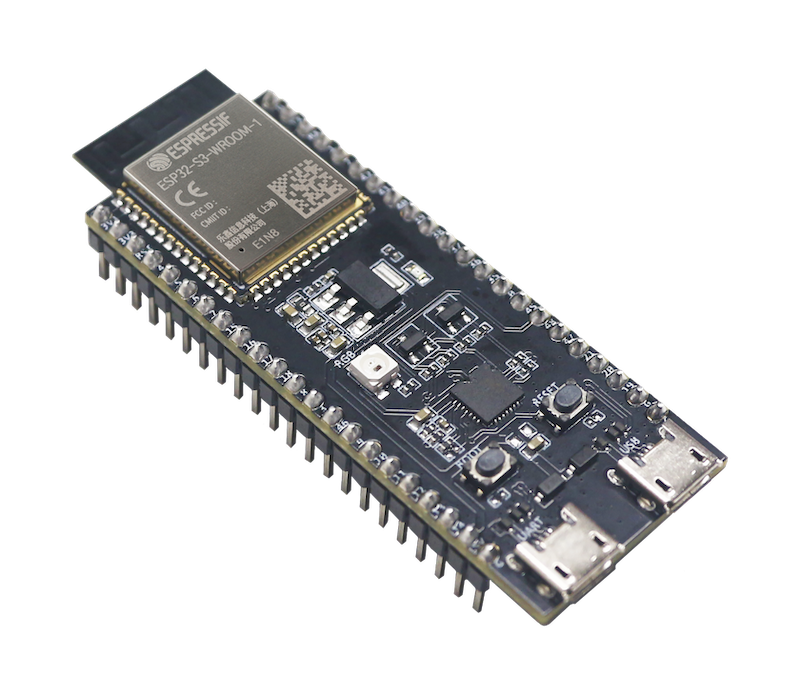
Follow a signal through the model graph, INT8 weights, generated C++ and measured prediction differences to the ESP32-S3 target. The board photograph is a hardware reference; physical-board testing remains pending.
Original graph.
Explicit limits.
Traceable output.
Reading the archived generated file.
Identify the binary.
The reports identify the bootloader, partition table and application binary for each integration fixture.
Execution with an audit trail.
Verifying the preserved report files.
Report integrityReading
Each report is checked against the SHA-256 hash in its preserved provenance manifest before its records are displayed.
Run identityReading
Begin, sample and done records must share a run identity. Model and dataset identities must match the report summary.
Complete observationsReading
Observation counts, unique sample/repetition pairs and the aggregate error are checked against the actual record stream.
Physical-board validationNot run
These archived records describe emulator execution. They do not establish physical-device speed, power consumption or application accuracy.
Inspect the observations.
Records Table / sortable, filterable, traceable
The fixtures use different model graphs. Inspect each independently. Recorded latency describes emulated time and cannot establish physical-board performance.
| Source record |
|---|
Run the workflow.
Code Block / tagged source
Python 3.11 or 3.12. Install this version from source; the older published 0.1 PyPI package uses a different interface.
git clone --branch v0.2.0-beta.1 --depth 1 \
  https://github.com/alexhaya4/tinyml-deployer.git
cd tinyml-deployer
python -m venv .venv
. .venv/bin/activate
python -m pip install -e '.[emulation]'
tinyml-deployer --helpWatch the archived 54-second CLI recording
This is the previous captioned, silent replay of recorded command output. It is included as source material, not presented as a new hardware film. The sine conversion and separate compiled firmware fixtures are identified in the transcript.